

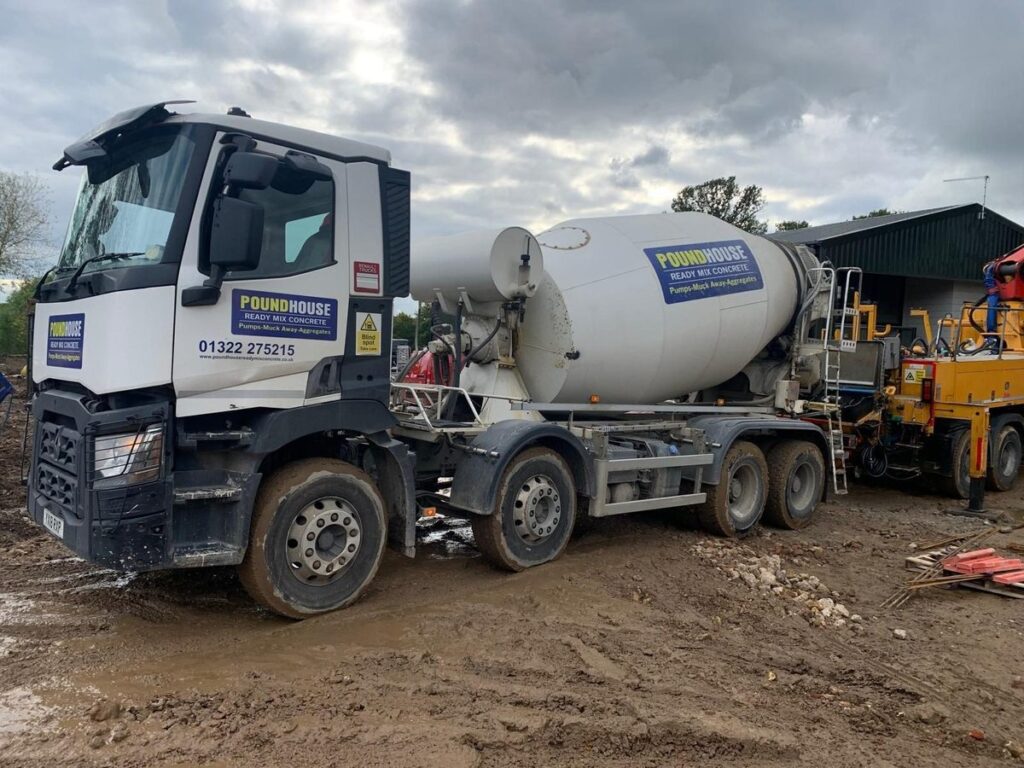
When planning a flooring or construction project, you may wonder if one is better than the other.
Both materials are widely used in construction. However, they are designed for different purposes. Concrete is mainly used for structural applications, while liquid screed is used to level and finish floors.
Choosing the right material can affect the strength, durability, installation time and finish of your project. Understanding the difference between liquid screed and concrete can help you choose the right solution for needs.
At Pound House Ready Mix Concrete, we supply high-quality ready mix concrete and screed across Kent and the surrounding areas. We work with both domestic and commercial customers. In this guide, we explain the key differences between liquid screed and concrete, where each material is best used, which option could be right for your project.
What is Concrete?
- Cement
- Water
- Sand
- Coarse aggregates such as gravel or crushed stone
- Foundations
- Driveways
- Concrete slabs
- Footings
- Structural flooring
- Patios
What is Liquid Screed?
It is usually made using:
- Cement or anhydrite binders
- Fine aggregates
- Water
- Additives for flow and performance
- Floor levelling
- Underfloor heating systems
- Internal flooring preparation
- Achieving smooth floor finishes
The Main Differences Between Liquid Screed and Concrete
1. Purpose
Concrete
Liquid Screed
2. Consistency
Concrete
Liquid Screed
3. Strength
Concrete
Liquid Screed
4. Surface Finish
5. Installation Speed
Which Is Better for Underfloor Heating?
- Improves heat transfer
- Reduces air gaps
- Creates an even floor surface
- Improves energy efficiency
When Should You Use Concrete?
- Structural strength is required
- Supporting vehicle loads
- Building foundations
- Creating driveways or patios
- External construction work
When Should You Use Liquid Screed?
- A perfectly level floor is needed
- Installing underfloor heating
- Covering large internal floor areas
- Preparing for tiles, vinyl, or timber flooring
- New-build homes
- Apartments
- Commercial flooring projects
Is Liquid Screed More Expensive Than Concrete?
- Labour time
- Installation costs
- Finishing work
- Floor size
- Depth required
- Project complexity
- Installation method
Can Liquid Screed Replace Concrete?
- Concrete provides the structure
- Liquid screed provides the finish
Final Thoughts
Both materials play important roles in modern construction, but they are designed for very different jobs.
FAQs – Liquid Screed vs Concrete
Is liquid screed stronger than concrete?
Is liquid screed good for underfloor heating?
Can liquid screed be used outside?
Does liquid screed crack?
Which dries faster, liquid screed or concrete?
Drying times vary depending on depth and conditions, but liquid screed often allows faster installation over large floor areas.